
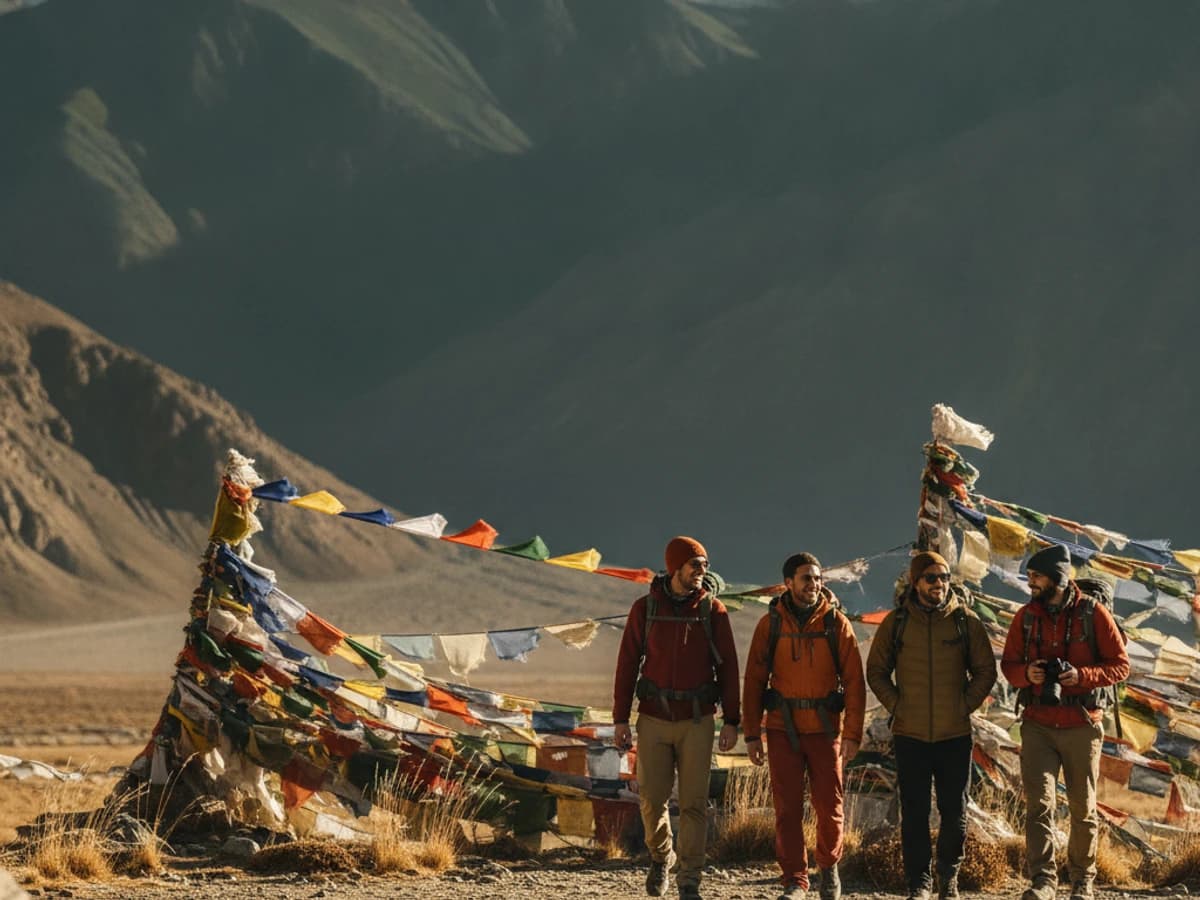
Ladakh Reise: Das Himalaya-Abenteuer für besondere Indienreisen | Updated August 2026 | Reiseria Editorial Team
A Ladakh Reise 2026 ranks among the most compelling ways to experience India. Positioned at an average altitude of around 11,500 feet (3,500 meters) and sheltered from the Indian monsoon by the Great Himalayas, Ladakh delivers turquoise lakes, ancient Buddhist monasteries clinging to cliff faces, and high-altitude passes where silence is absolute. For discerning German travellers seeking something beyond a standard package tour, a privately curated Ladakh journey offers an unforgettable experience.
Germany ranks among the top five source countries for international tourists in India, with the luxury travel market expected to reach USD 179,676.9 million by 2033, growing at 10.8% annually from 2026 to 2033. Ladakh sits at the heart of this trend, drawing affluent adventurers and families who value depth over distance. Planning matters: the right timing, permits, and travel partner make the difference between a good trip and one you'll recall for years.
"The quality of light at altitude, the scale of the Indus Valley, the ancient monasteries on cliff faces, the silence of Pangong Tso at dawn — these are things that stay with you permanently."
When Is the Best Time to Visit Ladakh in 2026?
The best time to visit Ladakh is June to September. Each month offers a different experience — from snow-walled passes in early summer to golden autumn landscapes in September.
Month-by-Month Season Guide
| Month | Weather | Roads | Crowd Level | Best For |
|---|---|---|---|---|
| May | Mild, 10–20°C | Manali-Leh opens mid-May | Low | First-timers, peaceful landscapes |
| June | 15–25°C daytime | Both highways clear | Moderate | Snow passes, road trips, photography |
| July | 12–27°C in Leh | Every road is open | High | Hemis Festival, long daylight hours |
| August | Warm, stable | All routes accessible | High | Culture, trekking, lake visits |
| September | 10–20°C | Still open, closing late Oct | Low–Moderate | Photography, fall colors, thinner crowds |
Winter option: January and February open the famous Chadar Trek — walking on the frozen Zanskar River — but requires specialist preparation and suits only experienced cold-weather travellers.
- June entry strategy: Enter via Srinagar and return via Manali for the most scenic circuit with gradual acclimatization.
- September sweet spot: Many rate September as the best time — monsoon ends, skies turn deep blue, and crowds thin out.
- July festivals: The Hemis Festival features masked dances and folk music.
- Booking lead time: Reserve accommodations and permits at least four weeks in advance for June or July travel.
Key Takeaway: June to September suits every traveller type. September excels for photography and solitude, while July offers peak access and cultural festivals. For deeper context, see Trekkingreisen Indien.
Must-See Highlights: The Iconic Ladakh Itinerary
A well-structured Individuelle Rundreise Ladakh (individual Ladakh tour) weaves together three zones: the cultural heart around Leh, the otherworldly Nubra Valley, and the high-altitude lakes. The richest itineraries connect all three over 10–14 days.
The Monastery Circuit
The Ladakhi monastery circuit — Hemis, Thiksey (morning prayer at 6 AM), Shey, Namgyal Tsemo above Leh, and Alchi (with the finest murals in Ladakh dating to the 11th century) — fills three days of cultural exploration. Arriving at Thiksey before dawn transforms a sightseeing checkpoint into a genuinely moving moment.
- Hemis Monastery: The largest monastery in Ladakh, founded in the 1630s. Visit during Hemis Tsechu in June–July for the masked dance festival.
- Thiksey Monastery: Located 19 km east of Leh, resembles the Potala Palace in Lhasa. Houses a 15-meter-high Maitreya Buddha statue.
- Pangong Lake: At 14,000 feet (4,250 meters), famous for its shifting colors. An overnight stay is non-negotiable.
- Nubra Valley: Features unique sand dunes and double-humped Bactrian camels against a Himalayan backdrop.
- Tso Moriri Lake: At 4,522 metres, this less-visited alternative to Pangong sits in a wider valley with Korzok Monastery on its western shore.
| Highlight | Distance from Leh | Altitude | Recommended Duration |
|---|---|---|---|
| Thiksey Monastery | 19 km | 3,600 m | Half day |
| Hemis Monastery | 45 km | 3,563 m | Half day |
| Pangong Lake | 160 km via Chang La | 4,250 m | Overnight |
| Nubra Valley | 140 km via Khardung La | 3,050 m | 2 nights |
| Tso Moriri | 250 km | 4,522 m | 1–2 nights |
Key Takeaway: A private, modular itinerary built around your pace delivers more than any fixed group tour. Building the right itinerary requires handling permits and logistics thoughtfully. For deeper context, see Individuelle Reisen nach Ladakh und ins indische Himalaya.
Permits and Practicalities for German Travellers in 2026
German travellers need two documents: an Indian visa and a regional travel permit. Both are straightforward when handled early.
India e-Visa for German Citizens
German citizens apply online at evisa.india.gov.in — no embassy visit required. The eVisa costs $25–80 USD with processing taking approximately 72 hours. Apply at least one week before departure and carry a printed copy.
Protected Area Permit (PAP) for Restricted Zones
The Protected Area Permit (PAP) is required for accessing scenic areas. As of 2026, foreign nationals must apply through a registered travel agent and travel in groups of two or more. The PAP is valid for a maximum of 15 days.
- PAP requirement: Required for Nubra Valley, Pangong Lake, or Hanle.
- Solo traveller note: You need a registered agency to secure a PAP for two people — you don't need to bring a friend.
- Hanle access update: Foreign tourists may now visit Hanle if staying at registered Astro-stays and following designated roads near the Indian Astronomical Observatory.
- Environment Fee: All visitors pay the Ecology Contribution Fund via the LAHDC permit portal.
- Registration tip: Register your trip with Germany's Auswärtiges Amt for emergency assistance support.
Key Takeaway: A registered operator handles the full permit workflow as part of itinerary planning, eliminating paperwork. Reiseria specializes in this approach for private Indien Luxusreisen (luxury India travel).
Altitude Sickness: How to Acclimatize Safely in Ladakh
Altitude is Ladakh's single most underestimated challenge. Most of Ladakh lies above 3,000 metres (9,842 feet). Leh sits at around 3,500 metres (11,500 feet) — higher than many European mountain peaks. Acclimatization is not optional; it is essential for safety.
Essential Acclimatization Steps
- Arrive by flight, rest immediately: Rest for at least 48 hours on arrival. Avoid sightseeing on day one.
- Hydrate aggressively: Drink four to six litres of fluids per day. Avoid alcohol for the first 48–72 hours.
- Ascend gradually: Stay in Leh initially before visiting higher locations like Pangong Lake or Nubra Valley.
- Know the warning signs: Early AMS (Acute Mountain Sickness) symptoms include headache, nausea, dizziness, fatigue, and sleep difficulties. Never ignore these.
- Consider Diamox: Diamox (Acetazolamide) helps the body acclimatize faster. Start one day before reaching Leh, after consulting a doctor.
- Physical fitness is not protection: Athletic travellers can still develop AMS if ascending too fast.
"Without proper acclimatization, travelers may experience fatigue, breathlessness, or altitude sickness. Managing high altitude is less about fitness and more about pacing and awareness."
Key Takeaway: Build a mandatory 48-hour acclimatization buffer into your Leh stay. No highlight is worth compromising health. For deeper context, see Ladakh Rundreise: Abenteuer im Himalaja - Indien.
How to Plan a Private, Tailor-Made Ladakh Journey
A Ladakh Reise 2026 rewards travellers who plan with intent. The difference between memorable and extraordinary lies in details: the right guide, the right stays, and a pace respecting both landscape and body. A specialist in Indien Luxusreisen (luxury India travel) earns its value here.
What a Private Ladakh Journey Should Include
- Personalised itinerary: Your route should reflect your interests — cultural depth, landscape photography, or physical adventure. One template serves none well.
- Handpicked accommodation: Choose from boutique heritage properties in Leh's old town to intimate lakeside camps at Pangong and eco-lodges in Nubra.
- Logistical fluency: Include acclimatization, route selection, permits, local transport, packing guidance, and buffer time.
- Cultural access: Morning prayers at Thiksey, family meals in Nubra, stargazing at Hanle — these require connections, not just a car.
- Flexible pacing: Weather and personal energy change. Adaptability is an asset; rigid schedules are liabilities.
Reiseria curates private journeys combining attentive service with considered logistics, tailored to mood, pace, and person. For German travellers seeking an Individuelle Rundreise Ladakh, exploring Reiseria's approach early — 4–6 months ahead — ensures access to the best properties and dates.
Key Takeaway: Build journeys from the inside out, starting with what moves you, then working backwards to logistics. Book a specialist 4–6 months ahead for optimal access. For deeper context, see Indien Reisen – Ladakh Trekking – Rajasthan.
Design my journey
Design my journeyLadakh as Part of a Broader India Journey
For many German travellers, Ladakh anchors a longer Indien Luxusreisen (luxury India travel). Ladakh pairs naturally with India's other defining regions, creating deeply layered journeys.
Complementary India Extensions
| Extension Destination | Why It Pairs Well with Ladakh | Recommended Duration | Best Combination Season |
|---|---|---|---|
| Rajasthan (Jaipur, Udaipur, Jodhpur) | Desert palaces contrast with Himalayan monasteries; rich Mughal and Rajput heritage | 6–8 days | September–October |
| Varanasi & Bodh Gaya | Deepens Buddhist cultural thread; India's spiritual heartland | 3–4 days | October–November |
| Spiti Valley (Himachal Pradesh) | Shares Ladakh's Tibetan Buddhist culture; accessible via Manali | 4–5 days | June–September |
| Delhi (entry/exit gateway) | Essential transit; 2 nights covers Mughal architecture and Old Delhi | 2 nights | Year-round |
- The Himalayan spine route: Fly Delhi–Leh, spend 10–12 days in Ladakh, travel overland to Spiti and out through Manali — a three-week journey covering mountain culture in depth.
- The cultural contrast circuit: Leh to Jaipur or Udaipur via Delhi contrasts Ladakh's monastic silence with Rajasthan's vibrant palaces and bazaars.
- The Oman extension: Oman complements an India journey remarkably well — both reward slow, private travel. Reiseria specialises in curating private journeys across both destinations.
Key Takeaway: Build Ladakh into a 16–21 day India journey. Regional contrasts make every destination feel more vivid.
Conclusion
A Ladakh Reise 2026 is one of the most transformative journeys available to German travellers. From Pangong Lake at dawn to Hemis Monastery's ancient chants, every element asks you to slow down and absorb the landscape.
- Timing is decisive: June to September is the core window, with September offering the finest balance of crowds, weather, and color.
- Permits are manageable: German travellers need an Indian e-Tourist Visa at evisa.india.gov.in and a Protected Area Permit — both handled smoothly through a registered operator.
- Altitude demands respect: Plan 48 hours of acclimatization in Leh before visiting high-altitude sites.
- Private beats generic: Ladakh's finest moments — monastery dawn prayers, village meals, cloudless nights — are unavailable through group tours.
- Start planning early: The best private accommodation fills quickly. A 4–6 month lead time ensures optimal options.
For planning your Individuelle Rundreise Ladakh (individual Ladakh tour), Reiseria specializes in private India and Oman journeys tailored to your mood, pace, and sense of adventure.
Key Takeaway: A private, well-planned Ladakh journey in 2026 offers unparalleled cultural depth and natural beauty, requiring early booking, careful permit management, and strict acclimatization protocols for a safe and memorable experience.
FAQ
What is Ladakh Reise 2026: Das Himalaya-Abenteuer für besondere Indienreisen?
A Ladakh Reise 2026 is a privately curated journey through Ladakh — India's high-altitude Himalayan territory — for travellers seeking more than standard group tours. Set at 3,500 metres (11,500 feet), Ladakh offers ancient Buddhist monasteries, turquoise lakes like Pangong Tso and Tso Moriri, and dramatic passes. The best 2026 experiences combine cultural immersion, natural highlights, and adventure within a personalised itinerary. The ideal travel window is June to September, with September offering solitude and exceptional photography.
Do German citizens need a visa to travel to Ladakh?
German citizens require an Indian visa. Apply online at evisa.india.gov.in, costing $25–80 USD with approximately 72-hour processing. Additionally, visiting restricted areas (Nubra Valley, Pangong Lake, Hanle) requires a Protected Area Permit (PAP) from a registered local travel agent, valid for up to 15 days.
What is the best time of year for a Ladakh trip?
The best time is June to September. June through August offer good weather with daytime temperatures of 15–25°C. September delivers golden landscapes, clear skies, and fewer crowds. June suits snow-covered passes and road trips, July offers peak access and the Hemis Festival, and September is ideal for photographers and quiet seekers. Winter (January–February) allows the Chadar Trek but requires specialist preparation.
How do I avoid altitude sickness in Ladakh?
Prevent AMS by ascending gradually, taking acclimatization days, staying hydrated, avoiding alcohol, and limiting exertion initially. Spend at least 48 hours resting in Leh (3,500 m) before visiting higher destinations like Pangong Lake (4,250 m). Diamox (Acetazolamide) is commonly recommended — consult your doctor before use.
What permits do foreigners need to visit Pangong Lake and Nubra Valley?
Foreign nationals require a Protected Area Permit (PAP) through a registered travel agent. As of 2026, groups must include two or more foreigners on paper, though independent travel is allowed on the ground. The PAP covers Nubra Valley, Pangong Lake, Hanle, and Tso Moriri for up to 15 days.
What does a private Ladakh itinerary typically look like over 10–14 days?
A typical 10–14 day journey: Days 1–2 in Leh for acclimatization; Days 3–4 exploring monasteries (Hemis, Thiksey, Shey, Alchi); Days 5–7 in Nubra Valley via Khardung La; Days 8–10 at Pangong Lake via Chang La; Days 11–13 at Tso Moriri; return to Leh for departure. Flexibility is essential — Ladakh's weather demands adaptability.
Is Ladakh suitable for families and couples?
Ladakh suits couples and families with proper acclimatization planning and age-appropriate itinerary design. High-altitude areas like Pangong Lake (4,250 m) require caution for children. A private, specialist-planned journey with rest days and flexible routing is safer and more enjoyable than fixed group tours. Children under 12 are generally exempt from environment fees.
How far in advance should I book a private Ladakh journey from Germany?
Book 4–6 months in advance for peak June–September travel. The best private camps at Pangong Lake, boutique properties in Leh, and exclusive homestays in Nubra fill quickly — especially in July during the Hemis Festival. Apply for your Indian e-Visa at evisa.india.gov.in at least 2 weeks before departure. A specialist like Reiseria can manage all coordination.
This article draws on destination research from verified travel sources, including permit guidance from the LAHDC official portal and visa information from the Government of India's official eVisa portal. Altitude and acclimatization guidance is for general informational purposes — consult a qualified physician before high-altitude travel. All statistics and permit rules are subject to change; verify current requirements with relevant authorities prior to departure.