
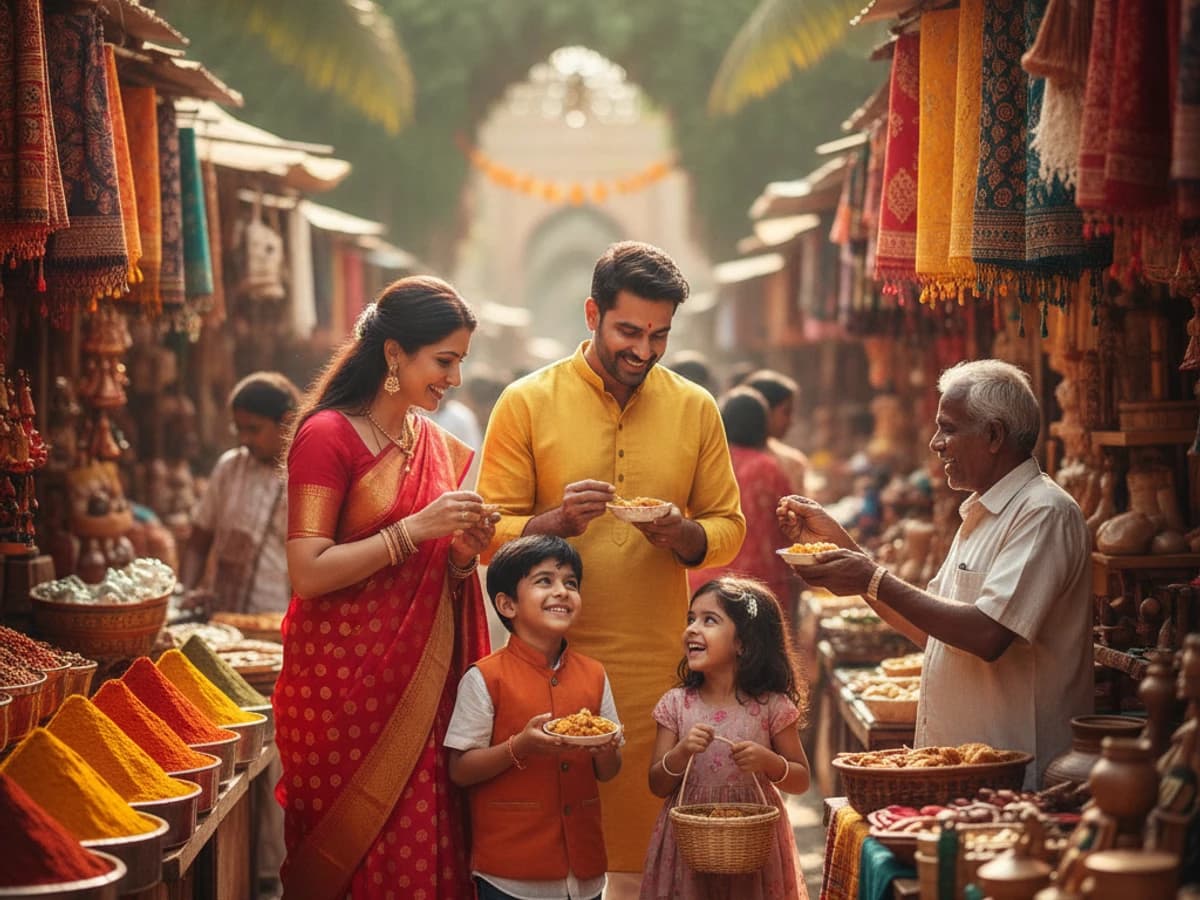
How to Plan a Private Family Trip Through India 2026: Relaxed & Varied — Step-by-Step Guide
Private Familienreise durch Indien: So wird die Reise entspannt und abwechslungsreich | Updated September 2026 | Reiseria Editorial Team | 10–14 days on the ground | Beginner
What You'll Learn
This guide walks German families through planning a private India trip that balances cultural depth with genuine downtime, navigating logistics that trip up most families while building an itinerary that's genuinely yours.
- How to handle visas and travel insurance without stress or last-minute scramble.
- How to choose the right season and route that keeps everyone happy.
- How to arrange private transport and book accommodation that lets your family recover between days.
- How to structure each day with time for exploring and time for rest—no burnout required.
- How to work with specialists to craft experiences that stick in memory.
Prerequisites: A valid German passport, basic travel insurance awareness, and a sense of your family's travel style. No prior India experience needed.
Why a Private Family Trip Through India Matters in 2026
India isn't a country you experience from a coach window. It pulls you in through colour, noise, flavour, and unexpected moments of stillness. For German families, it's also one of the world's most logistically complex places to navigate alone. A private, tailored trip removes those friction points so you can focus on what matters: the experience itself.
Family travel has shifted dramatically. Where families once chased long lists of sights, now they're after deeper immersion and time to breathe. That shift rewards careful, private planning far more than package-tour shortcuts. A comfortable private trip in India during peak season (December to February) runs roughly USD 200–250 per person per day, covering private transfers, guided tours, four- and five-star hotels, and internal flights. Knowing that number upfront means budgeting feels straightforward. For supporting data, see 10 Best Family Tours in India 2026/2027.
The Process at a Glance
| Step | Action | Time Required | Outcome |
|---|---|---|---|
| 1 | Sort visas and travel insurance early | 1–2 weeks before booking | Legal entry secured, family protected |
| 2 | Choose your route and travel window | 1–2 planning sessions | Realistic, weather-safe itinerary mapped |
| 3 | Lock in private transport and accommodation | Book 60–90 days ahead | Comfort and continuity guaranteed |
| 4 | Build a rhythm: sightseeing plus recovery days | Ongoing during planning | No burnout, every family member engaged |
| 5 | Curate 3–4 standout experiences per destination | 1 planning session per region | Memorable moments beyond monuments |
Total time investment before departure: 4–8 hours of planning spread over 4–6 weeks, plus booking lead time of 60–90 days for peak season travel.
Step 1: Sort Your Visas and Travel Insurance Early
Before booking any hotel, handle the paperwork. Skipping this step or leaving it to the last minute is the single most common reason families have their India trip disrupted before it even begins.
How to Do It
- Apply for the Indian e-Visa online. German citizens need a visa to enter India. Apply online through the official Indian e-Visa portal—no embassy visit needed. Processing takes about 72 hours, and the cost is USD 25–80 depending on duration.
- Apply well in advance. Apply at least two weeks before your planned travel date to account for delays during Indian public holidays and peak travel windows.
- Register your trip with the German foreign ministry. Use the Auswärtiges Amt India page to register your travel and check current advisories. If an emergency occurs while you're there, your government's embassy can reach you if you're registered.
- Buy comprehensive family travel insurance. Look for policies that cover medical evacuation, trip cancellation, and child-specific needs. Compare options via Check24 Reiseversicherung.
- Make digital and physical copies of everything—passports, e-Visa approvals, insurance policies. Store copies separately and email scanned versions to yourself as backup.
Common Mistakes
Waiting until the last minute for the e-Visa. Yes, it usually processes in 72 hours, but technical glitches happen during peak travel windows and Indian public holidays. Apply two weeks out and you won't spend the week before departure anxiously refreshing your email. For a more detailed walkthrough, see India Tours & Packages - 2026 & 2027.
Step 2: Choose Your Route and the Right Travel Window
Choosing the wrong season or trying to cram in too many cities is the fastest way to exhaust everyone. This step matches your route to the weather and your family's energy level.
How to Do It
- Pick your travel window first. The best time to visit India is October to March—the weather is pleasant across most of the country. For German school holidays, Christmas–January and Easter both fall perfectly within this window.
- Select a route that balances intensity with recovery. The Golden Triangle—Delhi, Agra, Jaipur—plus one relaxation segment (Goa beaches or Kerala's backwaters) is a proven formula.
- Keep the destination count realistic. Aim for no more than two destinations per week, with at least one full rest day between travel days. For a two-week trip, three or four cities is realistic. For a 10-day trip, two or three.
- Think regionally. North India is best from October to March; South India stays travel-friendly almost year-round. Ranthambore National Park safaris close July to September during monsoon season, so plan any safari for October–June.
Example: Two Classic Route Architectures for a 12–14 Day Family Trip
| Route | Destinations | Best For | Ideal Month |
|---|---|---|---|
| Golden Triangle + Kerala | Delhi, Agra, Jaipur, Kochi, Backwaters | Culture + relaxation balance | November–February |
| Golden Triangle + Ranthambore | Delhi, Agra, Jaipur, Ranthambore | Wildlife-focused families, teens | October–March |
| Rajasthan Deep Dive | Jaipur, Jodhpur, Jaisalmer, Udaipur | Heritage, desert, unhurried pace | November–February |
| South India | Kochi, Munnar, Alleppey, Thekkady | Gentle pace, nature, mixed ages | October–March |
Step 3: Lock In Private Transport and Hand-Picked Accommodation
Private transport and accommodation are the two logistics pillars that define the entire experience. Booking these early and matching them to your family's needs is where most of the planning payoff happens.
How to Do It
- Book private, air-conditioned road transport for nearby cities. For journeys like Delhi to Agra (3 hours) or Agra to Jaipur (4 hours), a private car lets you control the pace and manage breaks comfortably.
- Use domestic flights for long distances. For routes like Delhi to Varanasi or Delhi to Goa, flights save time and energy. Book via Google Flights or directly through Air India and IndiGo.
- Choose accommodation that lets your family recover. Hotel quality matters enormously on a multi-city trip. Pick boutique heritage hotels or premium properties that deliver consistent comfort.
- Consider working with a specialist end-to-end. Reiseria curates private journeys through India, assembling routes tailored to your family. If logistics feel overwhelming, this is where specialists earn their keep.
- Book 60–90 days ahead for peak season. Heritage properties and jungle lodges sell out well in advance during winter.
Best Practices
- Request vehicles with extra legroom if you have young children or older family members travelling.
- Confirm that accommodation has reliable WiFi and room service—this matters on heavy travel days when kids need downtime.
Step 4: Build a Daily Rhythm That Prevents Burnout
The most common mistake families make in India is trying to see too much. This step protects your family's energy by building rhythm into every day.
How to Do It
- Cap daily sightseeing at 4–5 hours maximum. A well-paced itinerary includes 4–5 hours of sightseeing with planned afternoon breaks for rest in your hotel.
- Schedule high-energy visits in the morning. A sunrise visit to the Taj Mahal followed by a relaxed afternoon beats back-to-back monument tours. Morning is cooler and aligns with when kids have the most energy.
- Build at least one full rest day per five to six travel days. Use these for hotel downtime, a cooking class, or a gentle local market wander—not more monuments.
- Plan evening experiences that wind the day down. An evening at a heritage haveli enjoying folk dances and Rajasthani cuisine closes the day without being physically demanding.
- Keep driving legs under four hours whenever possible. Aim for 3–5 hours of driving per day rather than marathon stretches.
Example: A Well-Paced Day in Jaipur
| Time | Activity | Energy Level |
|---|---|---|
| 7:00–10:00 | Amber Fort with private guide | High |
| 10:30–12:00 | Hawa Mahal exterior and old city walk | Medium |
| 12:00–15:00 | Lunch and hotel rest / pool time | Recovery |
| 15:30–17:30 | Block-printing workshop or bazaar browse | Low / fun |
| 19:00 | Rajasthani dinner with folk performance | Celebratory |
Step 5: Curate Standout Experiences That Go Beyond Monuments
A list of famous sights is not the same as a meaningful trip. This step layers in moments that families actually talk about years later.
How to Do It
- Layer hands-on activities into each destination. In Jaipur, add block-printing workshops, elephant encounters, and guided fort explorations. In Kerala, houseboat cruises, wildlife spotting, and spice plantation walks make every day meaningful.
- Choose wildlife over pure sightseeing for teenagers. A tiger safari in Ranthambore National Park—jeeping into the jungle, spotting tigers, sleeping under stars at a tented camp—creates lasting memories.
- Add one "slow" cultural immersion per trip. A private cooking lesson with a local family, a textile-dyeing workshop, or an early-morning Ganga Aarti boat ride creates emotional peaks.
- Let a specialist curate the hidden layer. When working with Reiseria, share your family's genuine passions. They build trips where every detail reflects your personality, not a template.
Best Practices
- Avoid stacking more than two major monuments on the same day.
- Always book wildlife safaris and sunrise Taj Mahal slots in advance—both sell out weeks ahead during peak season.
Design my journey
Design my journeyWhat to Do After Completing Your Trip Planning
Phase 1: Confirm and Pre-Brief (2–4 Weeks Before Departure)
Send a final briefing to all suppliers confirming children's ages, dietary needs, and any mobility considerations. Get your driver's full contact number and save it offline. Download offline maps via Maps.me or Google Maps offline mode.
Phase 2: On-the-Ground Adjustments (During Travel)
India rewards flexibility. If your children are tired after two heavy days, swap the scheduled monument visit for an afternoon at the hotel pool—no guilt required. Keep your plans flexible—India is best enjoyed when you hold the itinerary lightly. Your private driver and guide are your best real-time advisors.
Phase 3: Extend the Experience (After Return)
Many German families plan a second trip within 18 months. Both India and Oman are within the curated portfolio at Reiseria, so you can continue the journey without starting the planning process from scratch.
Resources You'll Need
| Resource | Role | Required / Recommended | Cost |
|---|---|---|---|
| Reiseria | Private India and Oman trip curation, end-to-end logistics, personalised itinerary design | Recommended for families wanting a seamless experience | On request |
| India e-Visa Portal (official) | German citizens' online visa application for India | Required | USD 25–80 |
| Auswärtiges Amt – India Travel Advisory | Official German government travel safety information and trip registration | Required | Free |
| Check24 Reiseversicherung | Family travel insurance comparison for German residents | Required | Varies by policy |
| Maps.me | Offline maps for navigation in areas with poor connectivity | Recommended | Free |
See also, see Rundreisen in Indien im Herbst 2026.
Troubleshooting Common Issues
The children are exhausted by day three
Likely cause: Too many consecutive monument days with no recovery, or driving legs longer than three hours without breaks.
Fix: Cancel the next day's sightseeing and use a hotel leisure day instead. Going forward, apply the 4–5 hour daily sightseeing cap strictly, and schedule one full rest day after every two to three busy days.
The Indian summer heat is more intense than expected
Likely cause: Travelling between March and June when temperatures exceed 40°C on the plains.
Fix: Head to hill stations—Shimla in the north, Munnar in the south. If already on-route, shift all outdoor sightseeing to early morning (before 9:00) and late afternoon (after 17:00).
A key booking falls through at short notice
Likely cause: Overbooking at heritage properties during peak season, or limited inventory at tented safari camps.
Fix: A trip curator with on-the-ground supplier relationships can find comparable alternatives quickly. If self-planning, always confirm your cancellation and rebooking policy at the time of original booking.
Food becomes a recurring stress point with young children
Likely cause: Over-reliance on street food or unfamiliar restaurant choices without guidance.
Fix: With a private car and driver, dine only at trusted establishments. Ask your driver or guide for personally vetted restaurant recommendations. Avoid raw salads, tap water, unpasteurised dairy, and street food from vendors with poor hygiene practices until your child's stomach has adjusted. For more troubleshooting advice, see PRIVATE | definition in the Cambridge English Dictionary.
Conclusion
A successful private family trip through India rests on five clear decisions made in the right order: secure your visas and insurance, pick a season and route that makes sense, book private transport and quality accommodation, build daily rhythm that prevents burnout, and layer in experiences that actually matter.
The families who enjoy India most aren't the ones with the longest itineraries. They're the ones who resist the urge to see everything and instead choose to feel a few places deeply. India is a feast of colour and contrast—and private travel pairs that energy with the space to move at a pace that feels settled and unhurried.
Your next move: Decide on your travel window, sketch a three-to-four destination route, and either start booking independently or reach out to Reiseria for a personalised consultation. The earlier you act, the more choice you have—especially for peak-season accommodation.
FAQ
How do you plan a private family trip through India 2026 that is both relaxed and varied?
Start with five decisions made in the right order. First, secure the Indian e-Visa for every German family member through the official portal—apply at least two weeks out. Second, select a travel window between October and March when weather is reliably pleasant. Third, choose a route of three to four destinations maximum for a 12–14 day trip, pairing cultural intensity with a recovery segment. Fourth, book a private, air-conditioned vehicle for road legs and domestic flights for long distances. Fifth, build a daily rhythm that caps sightseeing at four to five hours and includes hotel rest time. Following this framework gives you a repeatable structure that works regardless of your family's age range or pace preference.
What is the best time of year for a family trip to India from Germany?
The best season is October to March, when weather is most pleasant for exploring heritage sites, cities, wildlife reserves, and beaches. For German school holidays, Christmas–January and Easter both fall within this window. February and March offer slightly fewer crowds than December while maintaining comfortable temperatures.
Do German citizens need a visa for India in 2026?
German citizens are required to obtain a visa before entering India. The Government of India provides a convenient e-Visa system allowing online application without an embassy visit. The e-Visa costs USD 25–80 and processing takes approximately 72 hours. Apply through the official Indian e-Visa portal.
How many destinations should a family cover in two weeks in India?
Aim for no more than two destinations per week, with at least one full rest day between travel days—for a two-week trip, three or four cities is realistic. Attempting more is the most common planning mistake. A tightly edited route allows each place to breathe and prevents the trip collapsing into a blur.
Why choose a private tour over a group package for India with children?
A private tour offers the perfect balance of flexibility and comfort while removing foreign travel stress. You control the pace, choose when to rest, adapt the daily plan to how the children are feeling, and have a dedicated driver and guide focused entirely on your family. Group packages require everyone to follow a fixed schedule—stressful when a child is tired or unwell.
What is a realistic daily budget for a private luxury family trip in India?
A comfortable private trip during peak season (December to February) costs approximately USD 200–250 per person per day—covering private transfers, guided tours, four- and five-star hotels, and internal flights. During shoulder months (October–November and March), costs decrease to roughly USD 170–200 per person per day. A family of four travelling for 12 days in peak season should budget approximately EUR 9,000–12,000 all-in for in-country costs, excluding international flights from Germany.
What are the most memorable experiences for children in India?
Children consistently remember hands-on and wildlife experiences more than monuments. In Jaipur, block-printing workshops and Amber Fort visits turn sightseeing into storytelling. For wildlife enthusiasts, a tiger safari in Ranthambore National Park is a highlight. In Kerala, a private houseboat cruise and spice plantation walk combine nature and culture. A private cooking class with a local family is almost universally loved by children from age six upwards.
How far in advance should I book a private family trip to India?
Book at least 3–4 weeks in advance, especially during school holidays—and for peak season (December to February), 60–90 days ahead is the safe standard. Heritage hotels in Rajasthan, tented safari camps, and houseboat packages sell out weeks ahead. If working with Reiseria, start the conversation at least three to four months before your planned departure to allow time for a fully personalised itinerary.
Methodology: This guide was researched and written in September 2026 using current travel industry sources, official visa documentation from the Government of India, and best-practice frameworks from private India travel specialists. Pricing figures are indicative ranges and may vary by season and accommodation category. Always verify visa requirements directly with the official Indian e-Visa portal before travel. This article is published by Reiseria and reflects the brand's expertise in curating private journeys through India and Oman.