
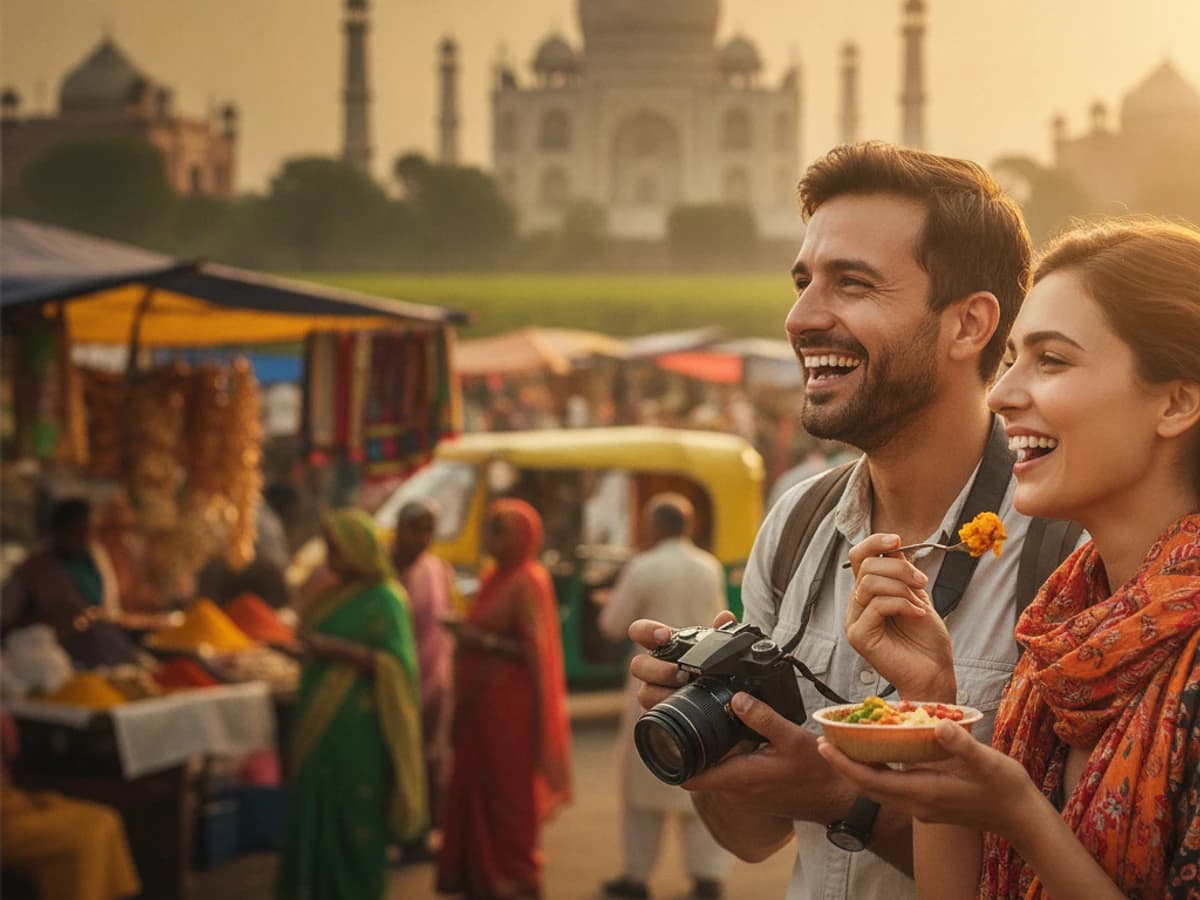
meilleure période Inde | Août 2026 | 8 min de lecture | Équipe éditoriale Reiseria
The best time to visit India for a first trip falls between October and March, when the dry season delivers mild temperatures, clear skies, and ideal conditions for exploring both the north and south. From November through March, you can comfortably visit major northern cities like Delhi, Agra, and Jaipur, explore Rajasthan's palaces, and venture south to Goa, Kerala, and Tamil Nadu without worrying about weather disruptions. The rule is simple: avoid the monsoon (June to September) and the scorching heat of May, and favor the cool, sunny months of October through March.
India is a subcontinent spanning 3.3 million square kilometers with climatic diversity that rivals entire continents. This immense variation stretches from the 8th to the 37th parallel north, offering travelers a unique meteorological palette—from the Rajasthan deserts to Kerala's tropical forests to the snow-capped Himalayan peaks. Choosing the right travel window isn't merely a weather question; it's the foundation of any memorable experience.
A trip to India doesn't unfold like a European getaway. The season dictates the landscape, the mood of the people, which roads are passable—even the color of the sky above the Taj Mahal. Choose your dates wisely, and you've already begun to travel.
The dry season (October to March): India's prime window for first-time visitors
The best time to visit the Indian peninsula is winter, roughly November through March. Temperatures are manageable, rainfall is minimal, and the overall conditions are predictable. For a first trip without unwelcome climate surprises, this window is both the safest and most versatile.
Temperatures and conditions by region
| Region | Ideal months | Daytime temperatures | Highlights |
|---|---|---|---|
| North (Delhi, Agra, Jaipur) | November – February | 15 – 25 °C | Golden Triangle, Mughal forts, Rajasthan |
| Rajasthan (desert) | October – March | 18 – 28 °C | Jodhpur, Udaipur, Jaisalmer, camel safaris |
| South (Kerala, Tamil Nadu) | December – February | 20 – 30 °C | Backwaters, temples, Kovalam beaches |
| Goa | November – February | 25 – 32 °C | Beaches, Portuguese colonial architecture |
| Himalaya (Ladakh) | June – September | 10 – 25 °C | High-altitude treks, Buddhist monasteries |
Why October–March works for first-time visitors
- Thermal comfort: This season brings pleasant temperatures and virtually no rain—15–25 °C in the north, 20–30 °C in the south. You can actually move around without collapsing.
- Maximum visibility: Clear skies and exceptional clarity reveal India's landscapes and architecture at their finest. The light is golden, the air crisp.
- Open parks and roads: National parks like Ranthambore (Bengal tigers) and Kaziranga are fully operational. Highways are passable, and logistics run smoothly.
- Low humidity: The north stays cool during the day (15–25 °C), the south pleasantly warm (20–30 °C), and humidity remains manageable throughout.
Key Takeaway: For a first India trip without climate stress, aim squarely for October–March. This window lets you traverse multiple regions in a single itinerary without having to choose between north and south.
When to avoid India: monsoon and extreme heat
Knowing when to stay away is just as important as knowing when to go. The monsoon transforms India entirely, delivering 80% of annual rainfall with intensities exceeding 300 mm in 24 hours. For a first-timer, this unpredictability makes logistics a nightmare and outdoor activities nearly impossible.
Two critical periods to understand
- The monsoon (June – September): Avoid these months unless you're specifically targeting Ladakh, which thrives for trekking from June through September. Flooded roads, closed monuments, and canceled flights make travel unpredictable for newcomers.
- Pre-monsoon / summer (April – May): Temperatures regularly exceed 40 °C across central India. Heat exhaustion becomes a real concern, and outdoor sightseeing becomes a study in endurance.
- Southeast coast in November: Tamil Nadu's coasts—Chennai, Pondicherry—get hammered by the northeast monsoon during this period. Save these destinations for later in your itinerary.
- The Ladakh exception: Ladakh has no monsoon, making it a remarkable anomaly. This Himalayan region opens precisely when the rest of India is drenched: June through September.
An experienced traveler chooses a destination based on the season. A wise traveler chooses the season based on the destination. In India, these two logics are inseparable.
| Period | Primary risk | Travel impact | Recommendation |
|---|---|---|---|
| June – September | National monsoon | Roads washed out, museums closed, flights canceled | Avoid for a first trip |
| April – May | Extreme heat (+40 °C) | Exhaustion, dehydration, shortened visits | Skip the north entirely |
| November (SE coast) | Northeast monsoon | Chennai and Tamil Nadu soaked | Head to Kerala or the north instead |
| January (deep north) | Cold nights and fog | Nights around 5 °C, Delhi fog | Pack warm layers |
Key Takeaway: The monsoon isn't just heavy rain—it's a major climatic event that reshapes the country for four months. Plan your first India trip outside this window, unless you're specifically drawn to Ladakh treks or the quieter side of Kerala's monsoon.
Festival calendar: when India becomes unforgettable
India's festival calendar ranks among the richest on Earth, and the major celebrations often align with the best weather windows. October through November is considered prime festival season, with Diwali, Durga Puja, Dussehra, and Dev Deepawali creating a cultural atmosphere you simply won't find elsewhere.
Key festivals to anchor your 2026 India circuit
- Holi (March 4, 2026): This spring-marking festival is most intense in northern India, with streets flooding with color, music, and celebration. Mathura and Jaipur deliver the most spectacular versions.
- Dussehra (October 20, 2026): Marking the end of Navratri, this festival features the burning of Ravana effigies at massive scale. Kullu's week-long celebration draws deities from across the valley.
- Diwali (November 8, 2026): The crown jewel of India's festival calendar. Varanasi and Ayodhya become genuinely magical, with thousands of diyas illuminating the ghats in a sight that stays with you.
- Pushkar Camel Fair (November 2026): This Rajasthan camel market draws tens of thousands into the desert—a spectacle unlike anything else for a first-time circuit.
Practical tip: Hotels in Varanasi, Jaipur, and Kolkata fill up rapidly during Diwali and Durga Puja. Book premium accommodations at least 3–4 months ahead if you're timing a trip around these festivals.
Key Takeaway: Weaving a major festival into your itinerary transforms a sightseeing trip into a living cultural experience. October through March combines the best weather and India's densest festival calendar.
Choosing your region based on season
India isn't a single destination—it's a continent unto itself, and each region follows its own seasonal logic. The best time to visit changes depending on where you're headed: Rajasthan, the Taj Mahal, and Ganges cities shine in February–March, Ladakh from June through September, southern India from December through February. For a first trip, matching season to region is how you build a coherent itinerary.
Three major circuits by season
- The Golden Triangle (Delhi – Agra – Jaipur): This remains the most logical circuit for a first visit, connecting the three cities with frequent extensions to Varanasi. Visit from October through March—ideally late February to early March, when crowds are manageable, weather is pleasant, and fog and pollution have lifted.
- Rajasthan in depth: The best window runs October through March, with March as the sweet spot. Popular festivals and beautiful spring light make the palaces of Jodhpur, Udaipur, and Jaisalmer glow with golden majesty.
- South India (Kerala, Tamil Nadu): Kerala, called "God's Own Country," offers peaceful backwaters lined with coconut palms, soft-sand beaches, and verdant hills. The ideal window is December through February, after the northeast monsoon has passed.
For travelers seeking a bespoke approach that blends north and south into one seamless journey, Reiseria designs private India circuits that account for seasonality, personal preferences, and your travel rhythm—ensuring each leg flows naturally into the next.
Key Takeaway: Region choice determines season choice, and vice versa. A well-designed first India circuit rests on this logic, avoiding nasty surprises and maximizing every step.
Design my journey
Design my journeyPractical planning: turning knowledge into action
Knowing the best time to visit India is one thing; translating that into concrete planning is another. A first India trip demands rigorous preparation, especially for travelers seeking high standards. Here's what to anticipate well before departure.
Bookings and advance planning
- Flights Paris – Delhi or Paris – Mumbai: Air France's direct flights from Paris-CDG to Delhi (roughly 8.5 hours) or Mumbai (roughly 9 hours) fill quickly between November and January. Book 4–6 months ahead for the best business-class fares.
- Indian visa: French citizens can apply for an e-Visa India online. Processing typically takes 72 hours, but budget a full week before departure for safety.
- Premium hotels: Rajasthan's palace hotels—the Taj Lake Palace in Udaipur, RAAS Jodhpur, Samode Palace in Jaipur—often show "full" by September for peak season. Reserve each leg early: accommodations, inter-city transport, and prioritize flights for long distances.
- Health and vaccinations: The Institut Pasteur recommends vaccinations against hepatitis A, typhoid, and—depending on your itinerary—meningitis and Japanese encephalitis. Consult a travel doctor at least six weeks before departure.
- Travel insurance: Choose a policy covering medical evacuation and trip cancellation for premium India stays. French providers like AXA offer luxury long-haul travel packages.
On-the-ground logistics
- Domestic transport: For connecting Delhi, Agra, Jaipur, and Kerala, prioritize flights for long distances. Indian Airlines and IndiGo offer frequent, affordable domestic service.
- Specialized support: For travelers wanting friction-free travel, a boutique agency like Reiseria handles end-to-end planning—itinerary, private transfers, and every detail—with a dedicated specialist who tailors the circuit to your profile.
Key Takeaway: Successful India vacations require 3–6 months of advance planning during peak season. Hotels, visas, and health preparations are non-negotiable for a stress-free first trip.
Conclusion
The best time to visit India for a first trip is the dry season from October through March, offering the ideal blend of comfortable weather, accessible regions, and a rich cultural calendar. A well-designed itinerary built around this window and tailored to your interests transforms an India trip into a foundational life experience.
- Prime window: October to March for most destinations, with November–February preferred in the north and December–January in the south.
- Festivals to experience: Diwali (November), Holi (March), and Dussehra (October) offer unmatched cultural immersion.
- Signature regions: The Golden Triangle (Delhi, Agra, Jaipur) for a first circuit; Kerala for nature and tranquility; Rajasthan for palatial grandeur.
- Essential advance work: Secure your visa, book premium hotels, and arrange flights 4–6 months ahead for peak season.
- Personalized approach: For an India journey that adapts to your pace, sensibilities, and desires, a boutique specialist like Reiseria designs private circuits where every detail becomes intentional.
India isn't visited—it's absorbed. Choose the right season, and you've already laid the groundwork for an unforgettable first experience.
FAQ
What's the best time for a first-time India trip?
The dry season from October to March is ideal. Temperatures stay pleasant (15–25 °C in the north, 20–30 °C in the south), rain is minimal, and most regions are accessible simultaneously. For the Golden Triangle and north, November–February is perfect. For Kerala and the south, December–February works best. March–April lets you catch Holi. Avoid the monsoon (June–September) and the intense heat of April–May on your first visit.
What's the difference between high and low season in India?
High season (October–March) offers optimal weather, fully booked hotels, and higher prices. Low season (June–September monsoon) brings discounted rates but closed roads, shuttered attractions, and canceled flights. The shoulder months (April–May) are hot but dry—cheaper, yet exhausting.
Can you visit both north and south India on one first trip?
Absolutely—and it's recommended for a deeper first experience. December through February is perfect for combining both: the north enjoys mild temperatures while the south emerges from the northeast monsoon. A 14–21 day circuit using domestic flights can connect both regions seamlessly. Reiseria specializes in designing these blended itineraries with flawless logistics.
Which festival should a first-timer target?
Holi (March 4, 2026) dazzles with color and energy in northern cities like Jaipur and Mathura. Diwali (November 8, 2026) offers spiritual depth and visual magic, especially in Varanasi and Ayodhya. Both require booking hotels 3+ months ahead—premium properties vanish quickly around festival dates.
Do French citizens need a visa for India?
Yes. French nationals can apply for an e-Visa India online, processed within 72 hours. Apply a week before departure to be safe. For complex multi-state itineraries, consult your travel agency about any special requirements.
How long should a first India trip be?
Budget at least 12–14 days. This covers the Golden Triangle (7–8 days) with room for Varanasi or deeper Rajasthan exploration. For combining north and south—say, Rajasthan and Kerala—aim for 18–21 days. India rewards the unhurried traveler; two nights per city lets you absorb the place and invite serendipity.
Is Ladakh suitable for a first-time India visitor?
Ladakh appeals more to experienced travelers. It's accessible only June–September (opposite of peak season), sits at 3,500 meters elevation (requiring 2–3 days acclimatization), and demands robust logistics. For a first trip including Ladakh, combine it with an easier region (Delhi as a transit hub) and plan meticulously. Reiseria designs these hybrid itineraries with careful altitude progression.
How do you avoid common first-trip mistakes in India?
The biggest errors are trying to cover too much ground too quickly, underestimating distances, ignoring local seasons and festivals, and booking hotels too late in peak season. The solution: focus on one primary region, allow at least two nights per stop, align your trip with festivals you want to experience, and partner with a specialist. A dedicated expert—like those at Reiseria—anticipates these pitfalls and crafts a circuit matching your pace and preferences exactly.
This article is written for informational purposes and draws on specialized travel climatology sources, official tourism data, and India travel expertise. Festival dates are based on the 2026 Hindu calendar and may shift by a day depending on region. Weather remains inherently variable—always consult current forecasts and French Foreign Ministry travel advisories before departing for India.